TELL US YOUR STORIES
Share Your Recollections About the Ford Foundation HERE
MEMBER FORUMS
Affinity Groups (2) |
Events (5) |
Volunteers (2) |
Classifieds () |
Recollections (1) |
 |
NEWSLETTER
|
Speaking of Off-the-Wall Grants.... By Willard J. Hertz
The article reported a three-day tour by five Michigan transit advocates using public systems to promote the development of regional public transportation systems. The tour, called the Michigan Transportation Odyssey, is a project by Transportation for Michigan, which was funded by the Ford, Kresge and Charles Stewart Mott foundations, the first and third of which are former
employers of mine.
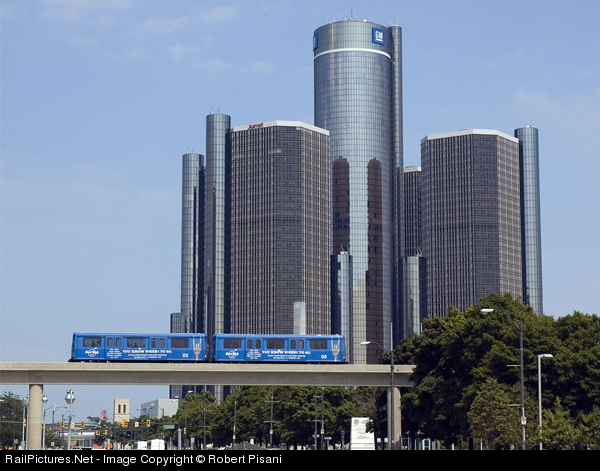
The first day of the tour involved travel by public bus from the Detroit Airport to the Ford River Rouge plant, then by the Rosa Parks Transit Center, then on the Detroit People Mover around downtown Detroit. The Detroit People Mover was my baby at the Foundation, with Lou Winnick’s help in drafting the grant recommendation.
First, a little FF history: In 1968 the Foundation established the Fund for the City of New York to support innovative projects by New York City and its supporting services. An annual appropriation was set by the imputed value of the Foundation’s exemption from city real estate taxes.
In 1973, Henry Ford II, a member of the Foundation’s board, complained that there was no such funding for the Ford family’s home state—Michigan. To keep peace in the family, the Foundation approved an annual fund for Michigan in the same dollar amount as was appropriated for New York City. These Michigan charities were to receive annual funding determined by the evaluation of the FF building in New York City.
The logic of this escapes me, but Mac Bundy—a son of Grand Rapids, Michigan, his Harvard associations notwithstanding—went along with this formula. When I left in 1981, Frank Thomas—a native of Brooklyn—abolished the Michigan fund, but the NYC fund still exists, at a more modest level, as an independent FF grantee (2011: $300,000 for a project to protect immigrant and migrant rights).
The appropriation for the Fund for Michigan was assigned to the Foundation’s Secretary’s office for managing and reporting. As the assistant secretary—and the only person in the Secretary’s office who had ever written a grant recommendation—I was named responsible program officer. To do the leg work and help with my decision making, I recruited regular program officers as partners.
One of my first acts was a planning grant of $400,000 to the Detroit People Mover (DPM). With Henry Ford’s involvement and that of his Dearborn staff, it couldn’t have been otherwise. With no staff experience in urban transportation, I turned, as I often did in such instances, to Lou Winnick to wing the grant recommendation.
DPM is a 2.9-mile automated, elevated light-rail system, which operates one-way on a single set of tracks, and encircles downtown Detroit. It was promoted to the Foundation as an important asset for business travelers, tourists, residents and downtown workers.
How did FF get involved? Back in 1975, the federal government sponsored a nationwide competition for the planning and construction of innovative urban transportation systems. There were three winners: Detroit, Miami and Baltimore. However, the projects had to be carried out with existing grants, and Baltimore and Miami withdrew from the program. You’ve guessed it: Detroit proceeded with a grant from the Fund for Michigan.
As might be expected, construction funding was hard to come by. After numerous starts and stops, DPM officially opened in 1987 as a component unit of the city of Detroit. DPM uses the same driver-less technology as Vancouver’s SkyTrain and Toronto’s Scarborough RT Line.
Has it been successful? The figures to date are not encouraging. At the time of the planning it had a projected ridership of 67,700 a day. In its first year of operation, the figure was only 11,000 and it dropped within a few years to 7,000. The cost-effectiveness figures are even less exciting: $4.26 in cost per passenger mile in 2009, compared with Detroit bus routes of $0.82.
Transportation for Michigan now hopes to turn these trends around with the economic recovery under way in metropolitan Detroit and by extending DPM within Detroit and linking it to several public transportation developments planned in the Detroit region, including public rapid transit to and from the airport and the University of Michigan at Ann Arbor.
Will Hertz is an editor of the LAFF Society newsletter.
|